Wednesday, 17 June 2009

Unit 44 - Advertisement Production for media


Task 1(P1,M1,D1)
Analysing Radio Advertisements

I am going to analyse two radio advertisements that appear in the game ‘Grand Theft Auto’. The styles of all the ads are humours due to the nature of the game; however each one uses typical radio ad conventions.

Grand Theft Auto – Military Ad

Styles

This ad is a recruitment ad for the Armed forces. It used a lot of repetition of the slogan ‘In the Military’ which is usually used after a persuasive statement such as ‘be No.1, Turn your life around’ this makes the military out to be the best thing the audience could be doing with their life, this is enforced by the use of patriotic slogans and music, suggesting that the audience will also be benefiting their country. The ad also makes use of facts, making a seemingly straight forward ad seem much more sophisticated, that glamorise the military. As the target audience is typically working class, young, unemployed (or unhappy with work) men, theses ‘facts’ are more likely there to overwhelm and impress, rather than to prove a point.

Cultural codes are used effectively to appeal to certain demographics. A Mexican accent can be heard talking about how they had turned their lives around, this helps the ad appeal to different cultures and races. The language used in another vox pop refers to collage and the confusion it brings (with the answer to such confusing being ‘I’m always right, in the military’) again opening the ad up to a large demographic of people; students.

Purpose

As conscription is no longer used to fill the armed forces ranks, the Military has been turned into a ‘brand’ and is being advertised as one. The extreme consumerism and increasing pressure on national pride in our society makes the advertising world a perfect place for the Military to recruit. This advert uses excessive persuasion such as ‘a career when you are always on the winning team’ and ‘what could be more exciting…’ to further the message that the military is an absolutely amazing experience.

The idea of special offers is used by highlighting the befits that soldiers receive ‘Only in the military would a teenager be given responsibilities such as; driving a nuclear submarine…’ Again, this serves to show the military in a different light, opposed to the one that is heard about in the news. Since the ad is being used along side ads for products the opposing messages about the military are not obvious and thus it is easy to emphasize one or the other, an effective way of manipulating public opinion.

Radio Stations

An ad of this sort would be broadcast on local and regional stations. This way, the military can target a certain demographic and design their ad around a certain audience. In this case, working class, unhappy with work/unemployed men are being targeted through use of social codes and persuasive slogans. This is probably due to that certain demographic feeling frustrated with the current situation, and more susceptible to the messages being put across.

Grand Theft Auto – p.421 Smoking Kills

Styles

This ad it too raise awareness for the mock Proposition 421, which puts a ban on smoking. However, the serious tone of the ad is overridden by the hilarious vox pops and fallacious facts. The serious tone of the ad is built up through use of a slow, dramatic piano music bed and smooth informal voice. Shocking ‘facts’ are used to add to the tone and shock the audience into agreeing with the ad. ‘Facts’ such as “If you are around a smoker, you will die” are very serious and add to the overall tone, but due to the obvious misconceptions it is humours. Lastly, the aggressive language used by the speaker emphasises the shocking and serious tone.

The style used is very simple as it is their too get a quick message across, plus as this ad is for the long term change in laws; it needs to get across to as many people as possible. A quick, simple and shocking ad is perfect for these reasons.

Purpose

This ad is being used to change the public’s mind to get a majority vote on a certain proposition, thus its primary purpose informal and persuasive. Phrases such as ‘lets move up the food chain’ suggest that people who vote in favour of the ad are somehow better than those who don’t, also the signification of the phrase brings about ideas of evolution. It could suggest that this is the next evolutionary step for humans.

Radio Station

As this ad is for a certain proposition, it would only be broadcast within regional boundaries as that is where the vote and subsequent change in law would be taking place.

Toyota – Meeting Ad


Styles

The Toyota meeting ad is heavily based on humour, as it relies on a funny situation that, in some way, ties into the product. For instance, in this add, two office workers are imitating a client who has a strange, high pitched voice, the couple continue to make fun of the man voice as he enters the room. The situation that is created, along with the voices then men use are humours. The situation is then linked with the product with a tagline ‘Toyota Aventis, with electronic traffic avoidance system; be careful, you might get there too early’.

The audience kno

w that the two are officers workers due to a unique language register used, and the atmosphere which is created using sound effects. They talk about a ‘client’ and refer to meetings whilst phones ring in the background. This creates an atmosphere which is essential in delivering the comedic value, as the audience can relate to being in an awkward situation within a professional environment.

Purpose

This ad is clearly informational, as it is anchored towards the release of a new Toyota, and its features. It is more than likely part of a series of similar advertisements focusing on other main features of the new car.

Radio Stations

This ad, and others in the series, will have been broadcast nationally as Toyota will sell cars all across the country.


Task 2(P1,M1,D1)
Radio Advertising Conventions


"Advertising plays and essential role in todays world, it informs, entertains and promotes healthy compitition. Our aim at the ASA is to ensure that consumers do not just enjoy the ads they see, but they can trust the too"
http://www.asa.org.uk/About-ASA.aspx
Sometimes, in the commercial industry ‘healthy competition’ is the last on the minds of corporate boards and the advertising companies employed by them. Adverts can become a powerful tool in a society fuelled by commercialism, so it is necessary for companies such as ASA (Advertising standards authority) to regulate what commercials get broadcast. They use the CAP (Committee of Advertising Practice) codes to judge what is acceptable to broadcast. They do this through monitoring ads and going through the correct pathways to remove offending ads from the air. Repeat offenders are given sanctions.1 Also, a company known as RACC ‘clear’ scripts before they are aired; the ‘clearance’ makes sure that radio add scripts are in compliance with the CAP codes laid out by ASA. They also ensure that the conditions to broadcast (these are set up by OFCOM) are being met. They will advice on how radio ads can be changed to comply, if the ad is in breech of their rights or the CAP codes.


Task 3(P1,M1,D1)
Galaxy Radio Advertising
Galaxy is one of Britain’s most well known commercial radio stations, with broadcast areas throughout the country. Due to this, advertising plays a huge role in how Galaxy is run. The sales team at Galaxy are split up into three areas, London, Manchester and the local Yorkshire area. Theses teams are responsible for representing galaxy to advertising agencies, or companies such as Coca-Cola, thus essentially bringing in Galaxies main source of revenue.
‘Cost-Per-Thousand’ or CPT decides the price of advertising on Galaxy radio. The sales team compare the stations listening figures and how often the ad will be played to generate the cost. A person listing to the ad is know as a ‘Impact’ in the industry, when comparing listing figures and the ad timetable, it can be estimated how many ‘impacts’ they will get. CPT is cost per one thousand impacts. From thus, Galaxy use what they call a ‘Rate Card’ which is the benchmark price for ads, regardless of who is being advertised. This price is negotiated from the benchmark depending on different variables. The price range on average is quoted as ‘As long as a piece of string’.
New advertisers to Galaxy are advised to broadcast their ad for three months. It is said that an ad takes a few repeats before it sinks in; it needs to build a reputation and stick in the audiences mind. For three months airtime it typically cost £4000. However, that is just for the space to broadcast, not the commercial itself. 15% of the cost of airtime is added into the total cost for production of the commercial by Galaxies’ creative team. Not only do Galaxies advertise through commercials, but through sponsorships and ads on the Galaxies website. Other mediums such as publications or letters sent out by Galaxy bring in another source of advertising revenue, theses ads can be bought for as little as £500.


Task 4(P1,M1,D1)
Voice over's in radio

Voice over provide ads with a personality, a link between the audience and the advertisers, someone to deliver the ad in the way it needs to be delivered. Various voices have many different connotations that can benefit radio advertisers. Simple examples would be a soft, slow female voice for a beauty product and a loud, fast and eccentric voice for an upbeat commercial that is trying to get a message across, and too stick in the audience’s mind.

Another example would be a beer commercial, aimed at local (Yorkshire) working class men. For this specific ad, I would choose the ‘Yorkshire Voices – Female’ section, which contains various voice over’s from women with a Yorkshire accent; either one would be a perfect candidate. A women’s voice usually connotes trust and ease, so the audience will trust that this beer is THE beer that they want. Also, by using a voice actor with a local accent, the audience can relate to the ad, this is an example of the ‘Personal Identity’ aspect of the uses and gratification theory. Furthermore, using a female voice to sell a beer is an attempt to emulate the typical bar atmosphere with a women bartender who the male punters typically flirt with.

http://www.thevoiceovergallery.co.uk/gallery.asp

The ‘Many voice over’s’ VW ad is a perfect example of why and how voice over’s are used and to the extent they are used in radio ads. It cleverly uses ‘Britain’s most well know advertising voice overs’ to sell the product, however it is done is such a way that it highlights what each voice over brings to the ad. For example, a women’s voice is used and says simply “I’ve been brought in to highlight the fact that it will appeal to women instead of men”, until the end of the ad the audience are unaware that they are referring to the car. Due to this, the voice over’s spelling out why their certain voices are used, rather than advertising the car. The actual point of the ad only come at the end, when another well known voice over give out a tiny bit of information. Which again is interpreted in a humours way by the final lines of the ad. Whilst being very comical, the ad does more too advertise the use of voice over than it does the actual product. However, the scale of the ad and its innovation will be what is remembered and this is what will help sell the product.

Before their alliance in 1997 royalties for music artists were collected by two separate organizations; the ‘Performing rights society’ and the ‘Mechanical-Copyright protection society’. An artist would have to join either organization to be paid whenever their material is used. However, their merger in 1997 meant that royalties could be paid out by one organization the ‘MCPS-PRS Alliance’

As well as paying out royalties, broadcasters are required to purchase a license that allows them to play commercial music, and ensures that the artists will be paid for the songs that are played. The license fee’s are decided in several ways; firstly the medium that is being used to broadcast (Internet, Podcasts, Advertisements, etc). For example; PGFM uses a


Task 6(P1,M1,D1)
Benefits of Radio Adds

The radio has been a constant medium since its golden years in the 1930’s. It’s seemingly invincible lifespan, coupled with the fact that analogue radio appears in the majority of homes and DAB digital radio is on the rise, points to the undeniable benefit of radio advertising.

“DAB digital radio in 50% of UK households by 2010”

http://blogs.rnw.nl/medianetwork/dab-digital-radio-in-50-of-uk-households-by-2010-forecast

PGFM is a local radio station, run by local students. It has a real connection with the Pudsey community and gives the students of Pudsey Grangefield a unique and useful experience. Due to this, PGFM gets a lot of listeners from in and around the Pudsey area.

I can see radio advertising benefitting our client greatly. The shop is a hairdresser’s called Katherine’s, who’s main customers are female OAP’s, the exact sort of person that would be likely to tune into PGFM because they are Pudsey citizens who will be interested in it’s students and the advancements of their town, plus they have a lot of free time on their hands.


Task 7(P1,M1,D1)
Client Brief


Task 8(P1,M1,D1)
Proposals


Proposal 1
We want to take a classic advert approach for this proposal. To explain, we don't want a narrative and we simply want to advertise the hairdressers in the classic format, highlighting the good points about it and stating the whereabouts of the shop and some prices. Because the shop has a very feminine atmosphere we want to go into the actual hairdressers and get some voice-overs from the employees, and maybe some from the customers in order to reassure the target audience. We also want the music bed to be the kind of music you'd hear on an old wireless radio because this will appeal to the target audience, and other people will be able to appreciate the authenticity. We'll obviously end the advert with the details of the shop's location and their phone number so that people can ring up and book an appointment, we could also do this ending with the employees voices, this also gives the advert an organic feeling.

Proposal 2
The approach for this idea is a bit different because we want it to have more of a narrative. The advert is going to start with the sound of someone cutting with scissors repeatedly and a jaunty, generic jingle tune then another person saying “What on earth are you doing?” then the person doing the cutting is going to say “I’m cutting high prices!” then we’ll have a generic studio audience laughter followed by the details of Katherine’s hair salon, the jaunty jingle will play throughout the whole advert and fade out at the end.

Client's Verdict
The client said he felt much more comfortable with us using the first proposal because he said it looked like we'd given it more thought and he thought the end product would turn out better than if we used the second one. He liked the idea of using voice-overs from the employees because when customers come to the shop they might recognize the voices.


Task 9(P1,M1,D1)
1st Draft Script


Take the A-Train - Duke Elligton fades in

JULIE: Here at Katherine’s Hair Salon we constantly strive to give our customers the best service at the lowest possible price, but don’t take our word for it!

OAP #1: Vox-pop from OAP #1

OAP #2: Vox-pop from OAP #2

OAP #3: Vox-pop from OAP #3

DEBBIE: And there you have it! The customer is always right! Book an appointment today! Dial 0113 2570510 or just pop-in, our address is; 35 Lowtown, Pudsey.


Take the A-Train - Duke Elligton fades out

------------------------------------------------------------------------------------------------------

Client Feedback
Overall the script pleases me, it is almost exactly what I'd want the shop to be represented as and I think it will gain acclaim from existing customers and quite possibly attract new ones. The idea of using customers and employees in the advert really grounds the advert into reality and really captures the local atmosphere of the salon. I feel that this is the main selling point of the advertisement. However one thing I will suggest; I think the advert would be better if you took a 1st person approach. To elaborate, imagine walking into the salon with a sound recorder, this is what I want the advert to emulate. I feel this would further enhance the previously mentioned atmosphere, I will not go into too much detail of how I want it to sound because I feel you need some room to be creative and I don't want it to be too restricted.


Task 10(P1,M1,D1)
Final Script

Footsteps on concrete, door open, entrance bell chimes.


Take the A-Train - Duke Elligton fades in

JULIE: Hello, welcome to Katherine’s hair salon! Would you like a cup of tea?

OAP #1: Vox-pop from OAP #1

OAP #2: Vox-pop from OAP #2

OAP #3: Vox-pop from OAP #3

DEBBIE: We hope to see you soon! So book an appointment today! Dial 0113 2570510 or just pop-in, our address is; 35 Lowtown, Pudsey.

EVERYONE: BYEEEEEEE!!!

Take the A-Train - Duke Elligton fades out and door opens & closes with chime.


Task 11(P1,M1,D1)
Production


Task 12(P1,M1,D1)
Evaluation

Our purpose with this production was too produce an professional quality radio commercial that appealed to a specific target audience, in this case OAP’s. Personally, I believe that we achieved this too a tee. Every aspect of our ad was catered towards the target audience, making the whole ad relatable.

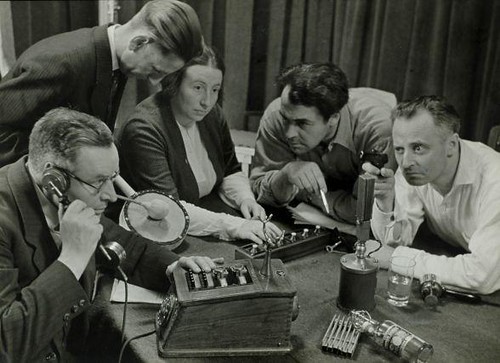
We gathered reactions from various individuals, including members of the target audience, as well as professionals such as our tutor. The reaction from the target audience was overly positive, commenting on the way they could relate rather than the technical quality. On the other hand, our tutor was very impressed and commented on how well it plays to the audience. Both lots of feedback were useful in their own ways, yet both took the preferred reading of our production.

The way our target audience were represented is slightly stereotypical, but in a humours manner that members of the target audience, and those who fall out of it, can recognise. The OAP’s featured tend to rabble on a little, slowly and quietly; obviously this represents OAP’s as slow and quite simple. In no way was this intentional or meant to be representational of OAP’s as a whole. However, it has become a humours stereotype that our target audience seem to relate too, rather than oppose. As the Salon we were advertising is generally a women’s salon, women were used throughout our ad.

The music bed was used extensively throughout and was employed to anchor the mood of the production. A period specific artist was chosen (one that the Target Audience would be able to recognise), as well as a genre of music that was prominent in the era. 1930’s Jazz was an instant decision as it was a defining genre of the 30’s, in which our target audience would have been in their prime. The Artist, Duke Ellington, a famous 30’s Jazz musician was used and a specific song was chosen for its upbeat song and old aged quality.

An external sound recorder was used to record the opinions of real clients in the salon. This was necessary due to the target audience, as the OAP’s would not have wanted to take the time out to come into school and use the radio studio, they would have to go out of their way when they were supposed to be getting their hair done!

As our purpose was to create a professional sounding ad, we tried our best to emulate a professional atmosphere and use the best quality equipment. AS in many units, the only thing separating out production from a professional one was funding. If we had many funds at our disposal, things such as equipment, acting, sound effects and other costly aspects would have been at a much higher quality.

Personally, this task opened my eyes to working with people of a hugely different demographic, everything from the way we operated equipment to the time frame we had to work with had to be adapted to suit the target audience. However, we came out of the other end with a strong product that represents our time spent working with the OAP’s. In the future, more planning on our behalf would be needed, so that we anticipate working around the target audience, rather than trying to do things as usual.

Unit 41 - Radio Drama


RADIO DRAMA


In 1940, Radio Drama was at its peak. During the Golden Age of Radio people would sit and listen to the tiny box that is so overlooked in modern society. For 70 years people have been tuning in to listen to Radio Dramas which started in 1927 when the radio networks started to adapt stories to be used on radio, eventually they began writing scripts to be used specifically on radio.


During the 1930’s comedic drama became a very important part of radio, bringing fun and excitement to people’s homes, the show ‘Amos 'n' Andy’ was one of the most popular shows, even when TV took over as the main medium in the home, ‘Amos 'n' Andy’ continued. It was also during the 30’s when advertisers took an interest in radio advertising, they buying up air time and sponsoring shows. This lead to the development of new types of shows such as; dramatized news programs, advice/interview programs and daytime "soap opera" serialized dramas.


Radio played a great part in the Second World War. It gave the public an escape from the war, radio offered a different world. A world of humor, drama and thriller, these sorts of programs became a lot more popular during the war as they provided the greatest escape from the war.

In the early years of television production costs were a lot more controlled as not many homes had a TV and sponsors were hard to find, so shows that had been a success on radio had their themes converted into TV, many highly acclaimed radio shows had TV adaptations straight away, such as the previously mentions Amis ‘n’ Andy and Gunsmoke (A western Drama).[1]

Today, Radio Dramas are still played on the more intellectual radio stations such as Radio 3 4 and 7. Now, as in the golden age of Radio, these Dramas can be “ranging from the experimental to the classics”[2] with shows such as The Archers, an everyday story of country folk, Seeing is Believing, Boxer and Doberman, a police/comedy drama, radio adaptations of stories such as Georg Orwell’s Classic Animal Farm and sci-fi dramas such as Paradise Lost in Cyberspace and Ghost Galaxies[3] it is quite obvious that Radio is still a great medium and I believe it is underrated in today’s culture of reality TV and the internet and it is a great achievement that it has survived till today.


The Radio Drama that sent America into disarray.
War of the Worlds

In today’s day and age, we take for granted how quickly and how easily we can access information. We can watch thousands of TV Channels; browse the internet and access an unlimited amount of information on millions of subjects all without moving more than a few feet. We also live in an age where, through no fault of our own, we are forced to take into consideration that what we are reading or hearing might not be the whole truth. In an age when propaganda is strong and hidden, we have to take everything with a ‘pinch of salt’. Also, due to the advancing effects that film & TV use, nothing is out of the ordinary, and we have seen it all before. But back when the TV was still in nappies, and the radio controlled the household, it was a very different situation.

The 1930’s was a time of depression and political un-easiness, the radio had been at the for front of home entertainment for 10 years but was still a revolutionary, exciting and experimental medium. Now the public were connected to the government and could have information streamed into their homes, and it was in this time that the public would realize how much control and influence the mass media could have.


George Orson Welles, an American actor, director, writer and producer, founded (With his friend John Houseman) the Mercury Theater which produced high quality plays. With their success in the theater, they moved onto radio in 1938, forming the radio series; ‘The Mercury Theatre on the Air’ and on Halloween the same year their 17th Episode, a radio adaptation of H.G Wells’ War of the Worlds’,[1] sent America into wide spread panic


Why? Well, they were many reasons and contributing factors but essentially, the radio adaption was designed to take the form of a musical show, interrupted by frequent news bulletins about the Martian invasion of Earth. This broke the conventions of the current dramas on radio at the time, which had mostly straight forward narratives. Also, due to the fact that the rival station to CBS, NBC, was broadcasting its popular ‘Charlie McCarthy Show’ which had a singer introduced about 10 minutes into the show, causing listener to turn stations whilst waiting for the star to return. They were greeted with the soft melodies of ‘Ramon Raquello and his orchestra’ [2] which were interrupted by a news bulletin about the Martian Invasion of Earth.
This caused wide spread confusion as they missed the introduction by Wells. A drama with a narrative such as this had never been attempted in the US, and due to the political atmosphere at the time, listeners took the mock news bulletins as truth and panic ensued. People rallied to defend the small town of Grover’s Mill (which has been the alleged landing site), barricaded their homes, left town and cowered in fear around their radios as H.G Wells’ story of a furious battle between Martians and the military became real for thousands of people.


The aftermath had Welles’ making a formal apology and the CBS networking reportedly stating that they wouldn’t use "we interrupt this program" for dramatic purpose ever again [3].

But was this reaction intended? The result of the broadcast showed how the world would react to a real invasion, could this be the reason why many alleged UFO sighting/crashes, such as the Roswell Incident in 1947, have supposedly been covered up by the government? To go even deeper, some theorists suggest whilst mass panic about a Martian invasion gripped the public and the media, a window was open for the US government to retrieve a real crashed UFO, the mock broadcast making it easy to cover up and anyone calming to have seen the real thing could be cast away, told that they are shook up from the broadcast, called paranoid and ignored. This would have given the American’s a brilliant opportunity, and at no better time considering that the world was again at the brink of war. Could alien technology have helped Einstein in realizing his theory’s, leading to the development of the Atom Bomb? And any other significant scientific discoveries since[4] to leap frog the world as a super power, leading to their undisputed power today.


Whatever your take on the story, one thing is for sure; The War of the Worlds radio broadcast shed light on how un-ready we are as a species to be able to deal with inter galactic communication but more importantly how much power the mass media could have on the public.


Task 1 (P1, M1, D1)

Analyzing Radio Drama
Star Wars Knights of the Old Republic: Outcasts Episode 1


The introduction voice is slightly high pitched and loud, this connotes the importance of the introduction, also as this is a radio drama based upon the star wars universe, which has a scrolling intro that sets the scene of the film, a voice over is needed to represent the importance and calibre of this introduction. The voice is smooth and keeps a constant rhythm, again this is because the introduction so is important to this story, the voice needs to be easy to understand and pleasing to listen to as they are the ones setting the scene for the whole drama. When the main villain is introduced his voice is slow, rough and sly. His voice connotes that he is evil, that he seems to be plotting and carefully thinking about what he is saying, signifying his intelligence. Juxtaposed against this is the voice of a simple foot solider, who stutters and has a quieter, more subtle voice. His voice signifies that he is ‘below’ the main antagonist and seen as a lesser person. More over, the hero is set up as a binary opposite to t

he villain. This highlights each of the characters personalities. The hero is a female, with a soft, flowing voice. She is juxtaposed against the villain.


Already, in the first few minutes of the drama I can see Props theory coming through, the villain and hero (along with her pet/sidekick) have already been set up, sticking to the conventions of a generic narrative. An atmosphere is created using a music bed taken from the films. By using the music that has been used in the films, an atmosphere is already created in the audiences mind, one that takes the feelings from the films and recreates them for the radio drama. For example, when the hero is introduced music used in the film (also when the hero is present) kicks in, coupled with simplistic sound effects such as farm animals and the blowing of wind creates the mise en scene of a good, loving and peaceful character, one that mirrors that of the films. I believe that to enjoy this Radio Drama the audience must have an understanding and interest in the Star Wars films as most of the imagery used relies greatly on that already set up by the films. Being an amateur production, the technical quality could be better. When different characters start to speak, the microphones coming into action can be here by a small pop. However, apart from this, the recording and editing create the atmosphere that the star wars films have been brining to homes for years.


Doctor Who: A Cause for Carolling

Voice plays a huge role in this Radio Drama from the start. One of the main villains of the doctor who series, The Daleks, are introduced straight away. Their high pitched, electronic voice is iconic to the series and the voice signifies the cold, evil, calicle attitude of the Daleks by using high pitched short, and usually evil, responses. Also using an electronic voice signifies that they are robotic. When the doctor is introduced, he uses an very standard English dialect which links to the TV series being a highly acclaimed British show. The Doctor uses a language register that shows that the drama is aimed at people who are interested in the doctor who show, as he uses words and phrases associated with the show, ones which a first time listener would not understand. Without an understanding of the Doctor Who show, a listener would feel lost as the iconic sound effects (such as the Tardiss’ signature woo woo) help move the narrative on.

As with the Star Wars radio drama (and which I think will be a common occurrence in radio dramas based from film or TV) this drama relies greatly on sound effects from the TV series. The iconic sound of the Tardis landing is used to introduce the Drama, followed by the sound of its door opening, then silence. The silence is used to create a sense of mystery and enigma.


Hitchhiker's guide to the Galaxy: Episode I - Part I

The narrator plays a large part in this famous radio drama. His voice is slow, clear and smooth, also he doesn’t have any notable dialect or accent. This is intentional as he is set up as an extra terrestrial being, and a lack of human dialects makes sense. When the story starts and the characters are introduced the main character, Arthur Dent, is in an heated argument with a contractor over trying to knock down his house.


Their voices keep interrupting each other rather than keeping to their own space, this signifies Arthurs attitude, that he won’t just be pushed over and will stand up for what he believes. The atmosphere of this scene is emphasized by the constant rumble of a bulldozer in the background, adding another layer of actuality and giving it a sense of urgency.


Task 3 (P1, M1, D1)
Short Drama Clips


Task 3 (P1, M1, D1)
Mindmaps
Below are two mindmaps that I brainstormed the ideas for my productions. Rather than just many ideas I focused on several ideas that I knew were strong and would definalty be used in the production.
Click \/


Click \/


Task 4 (P1, M1, D1)
Proposal


Alice in Wonderland

My adaptation of Alice in wonderland takes place in modern day Britain. Alice, a stereotypical chav, and her sister take a walk around a fantastic British forest (next to their estate). Alice comes across some 'magic' mushrooms and travels to wonder land.The drama will follow Alice as she hallucinates, the audience being treated to an unrestrictive narrative as they will hear what is really happening to Alice.

Operation 1138

An orginal story; During a Zombie Apocalypse five different characters find them selves trapped in a small warehouse. Tensions are already at boiling point when things start to take a turn for the worse. This drama will relly on the effective build up off atmosphere and relatable, interesting characters.


Task 5 (P1, M1, D1)
Treatments


Alice in Wonderland
My fairy tale adaptation takes the classic tale of Alice’s adventures in wonderland, and gives it a adult comedy make over. The main idea is that whilst Alice (who in my adaptation is a reckless youth) and her sister are relaxing in the forest, Alice comes across some ‘magic’ mushrooms which transport her to this wonderland. I picked Alice in wonderland to adapt as I think that the story can be moulded around a different narrative and still retain the original meaning of the story, Alice visiting a wonderland and by the end of the story she ‘wakes up’ thinking that is was just a dream. My target audience is going to be teenagers, as it is essential for people listing to my radio drama to; One- Know the story of Alice in wonderland, Two – Understand the effects of hallucinogenic drugs and Three – To have a light hearted opinion on these drugs. Another obvious reason for a more adult audience will be the use of the drug. The genre of my radio drama is Fairy Tale comedy, along the same lines as such films as Shriek.


The comedy will come from the narrative that is running parallel with Alice’s ad


ventures in wonderland, which is what is happening in the real world. Because she is tripping on mushrooms, Alice has no idea of what is going on in the real world, her effects on it and the consequences that she will have to deal with afterward. Whilst describing Alice’s hallucinations, the scenes will change and describe what is really going on. By using a multi-strand narrative, I am breaking the typical conventions of a fairy tale and adding more depth to the story.


A narrator will move the narrative along. The voice of the narrator will be that of a stereotypical middle class Englishman. Considering the stereotypical view of the English Upper/middle class (Rich, posh, well mannered) I will attempt to break these stereotypes with the use of comedy throughout, and considering the content of my radio show it will be crude comedy. To contrast, a typical ‘Chav’ or working class voice will be used for Alice, this will enforce her character as the stereotypes surrounding theses accents are typically violent, angry youths.
Operation 1138

Operation 1138 is a horror Drama that takes place in the fictional Armageddon of a Zombie Apocalypse. The five main characters have been trapped in a warehouse for a considerable amount of time, so the relationships between them are already tense. A radio broadcast that breaths new hope into the survivors which unfortunately splits the group. After this, things take a turn for the worse. Due to the scary nature of the Horror genre the target audience will range from teenagers to adults. Typical to this genre my drama makes use of gruesome effects, a restricted narrative (enhancing the creepy atmosphere) and character relationships, the use of witch give my drama the correct mise en scene.
The main characters are all drastically different and have disagreeing motives and attitudes. This, as well as the fact that they have been stuck together for a prolonged amount of time, creates ruptures within the group consequently leading to the disruption within the narrative. Due to the range of characters, the audience is bound to find someone to relate too, which brings me onto mention the Uses and Gratification theory which I can apply to my drama. First off, the audience is being entertained as my production is a Horror Drama. Secondly, they are creating personal identity within the characters as the wide range off personalities offers something most people will be able to relate too. Personal Relationships will be created when the audience discuss my production, which they are bound to do because of the atmosphere which is created and the enigma that surrounds all horror productions; why?
The atmosphere that my production is going to be created in several ways; firstly, the sound effects are essential. To drag the audience in the sound effects are frequent and effective, gripping listeners. To stick to horror conventions several gruesome sound effects have been selected, this signifies the terror and violence that has engulfed the characters. A constant zombie moan connotes the relentless hoard and reminds the audience that death is just around the corner. Secondly, a unique music bed builds the tension (through the use of slow, deep, violin/percussion style music) and helps speed up and emphasize action scenes (using several dubstep clips), furthermore I think that the uneasy atmosphere is boosted through the use of dubstep, which is a manic and spacey electronic genre.


Task 6 (P1, M1, D1)
Scripts


SCENE 1
Characters: Alice
Alice’s sister
Rabbit
OUTISIDE AMBIENCE, WIND, BIRDS. BUSHES RUSTLE [THROUGHOUT]
CARS CAN BE HEARD IN THE DISTANCE
CLOSEBY AND VOICES CAN BE HEARD GETTING LOUDER
ALICE: Shut up sis, we are almost there
SISTER: Don’t tell me too shut up Alice!
FOOTSTEPS ON FOREST FLOOR
MORE BUSHES
SISTER: What are we doing here anyway?
ALICE: You’ll see init!
WIND BLOWS AND SOUNDS BECOME CLEARER
ALICE: Yes mayte, here It is!
SISTER: What? It’s just a clearing, and it’s starting to get dark! …. Alice?
SPRAY PAINT CAN BEING SPRAYED
ALICE: Aaaaaaa-llllllll-iiiiiii
SISTER [SHOCKED]: You can’t graffiti a tree!
ALICE: Watch…
SPRAY PAINT CONTINUES
BUSHES RUSTLE
ALICE: LOOK! A Rabbit!
SPRAYING STOPS, CAN IS DROPPED
RUNNING STEPS CAN BE HEARD
SISTER [SHOUTING]: Allliiicceeeee waiiiitttttt……
RUNNING STEPS CAN BE HEARD, ALICE PANTING
ALICE: I’ma grip dat lil rabbit!
TWIG BREAKS ALICE FALLS TOO GROUND
SHUFFLING ALOUND GROUND
ALICE: Ahhhh yeah mate, shrooms!
SOUNDS OF A MUSHROOM BEING PICKED
ALICE MUNCHING ON IT
SOUNDS BECOME DISTORTED AS ALICE
QUITE AMBIENT DUB TRONICA MUSIC BED FADES IN
STARTS TO HULLUCINATE
ALICE: RABBIT!
SPEECH ECHOS, FOOTSTEPS RUN TO THE DISTANCE
SOUND RETURNS TO NORMAL
MUSIC STOPS
SISTER [IN THE DISTANCE]: ALICE! WHERE ARE YOU! [FADES OUT]
DISTORTION RETURNS, MUSIC BED PICKS UP
BUSHES CAN BE HEARD BEING PUSHED AROUND
RABBIT: I’M LATE, I’M LATE THE JOB CENTRE CLOSES IN HALF AN HOUR!
ALICE: OI! RABBIT, HANG ON!
RABBIT: NAH MATE, IM LATE AS IT IS, SOD OFF!
OUTSIDE AMBIENCE STARTS TO FADE AS TRAFFIC BECOMES LOUDER
DISTORTION ENDS AND MUSIC FADES OUT
LOUD CAR HORN, PEOPLE SHOUTING
BYSTANDER: GET OUTA THE ROAD!
CAR SCREECHES AS MUSIC KICKS BACK IN
ALICE: You can’t fit down there silly rabbit [GIGGLES]
FALLING SOUND EFFECT [WOOOOO]
SPLASH


Operation: 1138


The scene begins with the sound of a door opening. Jessica, a small blonde woman in her 20s enters a small room where the rest of the group are waiting. The group consist of:
Roger, a small fat man
Charles, a tall middle class man, whose three piece suit had been ripped and damaged
Margret, Charles wife
Brian, a typical working class fellow who rises to the occasion
Jessica, an intellectual woman who has interests in Brian


[Door Opening]
JESSICA: Quick, the radio’s come back on!
[Chairs squeaking, feet rushing. The group rush out and gather round the radio in the next room. Radio tuning sounds]


[A Low moaning can be heard throughout]
BROADCASTER: Actual statistics are... in-consistent at present but It is clear that we are past the point of no return. The virus had spread throughout every major county in the world, and shows no sign of slowing down. If anyone is hearing this then we have taken sanctuary at Westmount Military base, if you can we urge any survivors to make their way here and join our colony. Over and out. [Radio Static]


JESSICA: Right, it’s obvious to me we need to go there then.


ROGER: The man said ‘if we can’, which we can’t, the city is over run! Why is it only a few of us that understand this!

BRIAN: Okay everyone keep their heads, whatever we do we need to stick together.
CHARLES: NO! Me and my wife are getting out off this... this horrible pig sty of a refuge, isn’t that right dear?
MARGRET: Yes! I am sick and tired of theses god awful people!
BRIAN: Well, sorry we don’t all live up to your standards Margret, but if we want to survive this then we have got to put up with each other!
CHARLES: Who made you the boss Brian! If I were running the show we would all be out here by now.
JESSICA: Where are you going to go? What are you going to do? If we’re leaving we have to leave together!
ROGER: Hey guys, has anyone got any food?
CHARLES: Shut up Rodger, all you think about is food! It’s hardly the main concern here. Me and my wife are getting out of here whether anyone wants to join us or not!
MARGRET: Hold on Charles, I think that...
CHARLES: Don’t question me Margret, I know what’s best!
JESSICA: Don’t talk to her like that you sexist pig!
BRAIN: CALM DOWN! We aren’t going to get anywhere by arguing
CHARLES: We aren’t going to anywhere by sitting in this god awful factory for the rest of our lives! I’ve got too much money at stake to just die in this squalid hell hole! Come on Margret!
[Feet moving away angrily]


MARGRET: Charles I...
CHARLES: SHUT UP WOMAN, You stay here with these rotten degenerates. I am protecting my WEALTH!
[Door opens and slams shut]


BRIAN: THE MINI!
[Group run through to the door, sound of a locked door]
BRIAN: It’s locked...
[Banging on door]
[Garage door opening]
[The constant moan of zombies gets slightly louder]
GROUP: Shouting at Charles
[Car sets off hitting several zombies]


BRIAN: Quick, follow me to the balcony; we can watch him from there.
[Extended footsteps, going up stairs]
[Heavy steel door swings open, Zombie moans at full force, birds above]
MARGRET: My god...
[Group stay silent, the moans grow louder]
[Car driving round a corner, getting increasingly louder]
JESSICA: There he is
ROGER: Wha- What’s that smoke coming from the car?
BRIAN: I never got the chance to fix it...
[Car breaking down]
MARGRET: No... NO CHARLES!
[Charles screams as the zombies smash the windows and rip him limb from limb]
[High Pitched scream from down stairs, feet speeding back up the stairs]
[Margret can be heard crying throughout]
JESSICA (Panting): They’ve got in! There In!
ROGER: What do you mean? They’ve got in?
JESSICA: The Zombies! They must have come through the Garage
[Margret gasps]
ROGER: No! Charles, he let them in and... And he stole our only escape. We’re doomed.
BRIAN: Don’t be stupid Roger; they are decomposing bodies for Christ sake. All we have to do it shut the garage door.
[A Zombie moans close by, Jessica and Margret both scream]
[Brian punches the zombie, sending it flying down the stairs]

BRIAN: and we have got to hurry up, or we’ll be over run. Roger I want you to grab the rifle once we get downstairs. Jessica, you need to watch my back. Margret...
[Margret stops crying]
BRIAN: Just... keep safe. LET’S GO!
[The group hurry down the stairs, the distant zombie moans get quieter, ones inside begin to moan louder]


JESSICA: Brian! Look out!
[Zombie moans loudly, Roger shoots the zombie, abrupt end to the moan of the zombie]
BRIAN: Good shot Roger, thanks.
ROGER: No time for thank you’s, get to the garage!
[More running and moaning remains constant]
BRIAN: Where’s the key?!
JESSICA: It was on the car keys…
BRIAN: SON OF A… Roger, get that one so I can get to the door.
[Gunshots, Distressed zombie moan]
BRIAN: thanks Roger…
JESSICA: Where’s Margret?
[Margret shuffles into the garage as Brian shuts the garage, she stands next to Roger]
BRIAN: Are you okay Margret? We wondered where you’d gone.
MARGRET: The virus has spread too far! You’re all going to die! [Distorted voice, choking and wrenching as she chomps into Roger’s shoulder]
ROGER: ARGHHH
[Rifle drops to the floor]
BRIAN: Come on Jess! We’ve got to get out of here.
[Hoards of zombies pour into the garage as the pair run away]
JESSICA: They’re through!
[Brian picks up the rifle]
BRIAN: Get to the storage room! We can barricade ourselves in there!
[More running, opening the storage room door, slamming it behind them and propping a chair under the handle]
[Zombies pound on the door, walls and all around moans get louder.]
BRIAN: Two bullets left.


Task 7 (M1, P1, D1)
Production